

Introduction
Writing amazing content is only half the battle. Even the best articles need proper on-page SEO to rank on Google and attract readers. For writers, understanding and implementing on-page SEO is essential — it ensures your content is discoverable, readable, and optimized for search engines.
This step-by-step on-page SEO checklist will guide you through everything you need to optimize your blog posts in 2026.
1. Keyword Research
Before writing, you need the right keywords.
- Use tools like Google Keyword Planner, Ahrefs, SEMrush, or Ubersuggest.
- Focus on long-tail keywords that match user intent.
Checklist:
- Primary keyword identified
- 2–3 secondary keywords for semantic relevance
- Keyword search volume analyzed
- Competitor content reviewed
💡 Tip: Don’t overstuff keywords. Aim for natural usage in the title, headings, and content.
2. Optimized Title & Meta Description
The title tag and meta description are your first impression in search results.
Checklist:
- Primary keyword in the title (ideally at the beginning)
- Title length: 50–60 characters
- Meta description: 150–160 characters
- Meta description includes primary keyword naturally
Example:
Title: On-Page SEO Checklist for Writers – Step-by-Step Guide
Meta: Follow this step-by-step on-page SEO checklist for writers to optimize blog posts, rank higher on Google, and attract more readers.
3. Headings Structure (H1, H2, H3)
Organize your content for readability and SEO:
- H1: Page title (one per post)
- H2: Main sections (Checklist steps)
- H3: Sub-points or examples
Checklist:
- H1 contains primary keyword
- H2s include secondary keywords when possible
- Headings follow a logical flow
- Avoid skipping heading levels
💡 Tip: Clear headings improve user experience and SEO readability.
4. Content Optimization
High-quality content is the backbone of SEO.
Checklist:
- 1200+ words (long-form content tends to rank better)
- Use keywords naturally in first 100 words
- Include synonyms and related keywords
- Break paragraphs into 3–5 sentences
- Add bulleted or numbered lists for clarity
Pro Tip: Include images, infographics, and charts to improve engagement.
5. Image Optimization
Images enhance content but also impact SEO.
Checklist:
- Use high-quality images relevant to content
- Compress images to reduce loading time (TinyPNG or ShortPixel)
- Add descriptive file names (e.g., on-page-seo-checklist.png)
- Include alt text with keywords
- Use featured image for social sharing
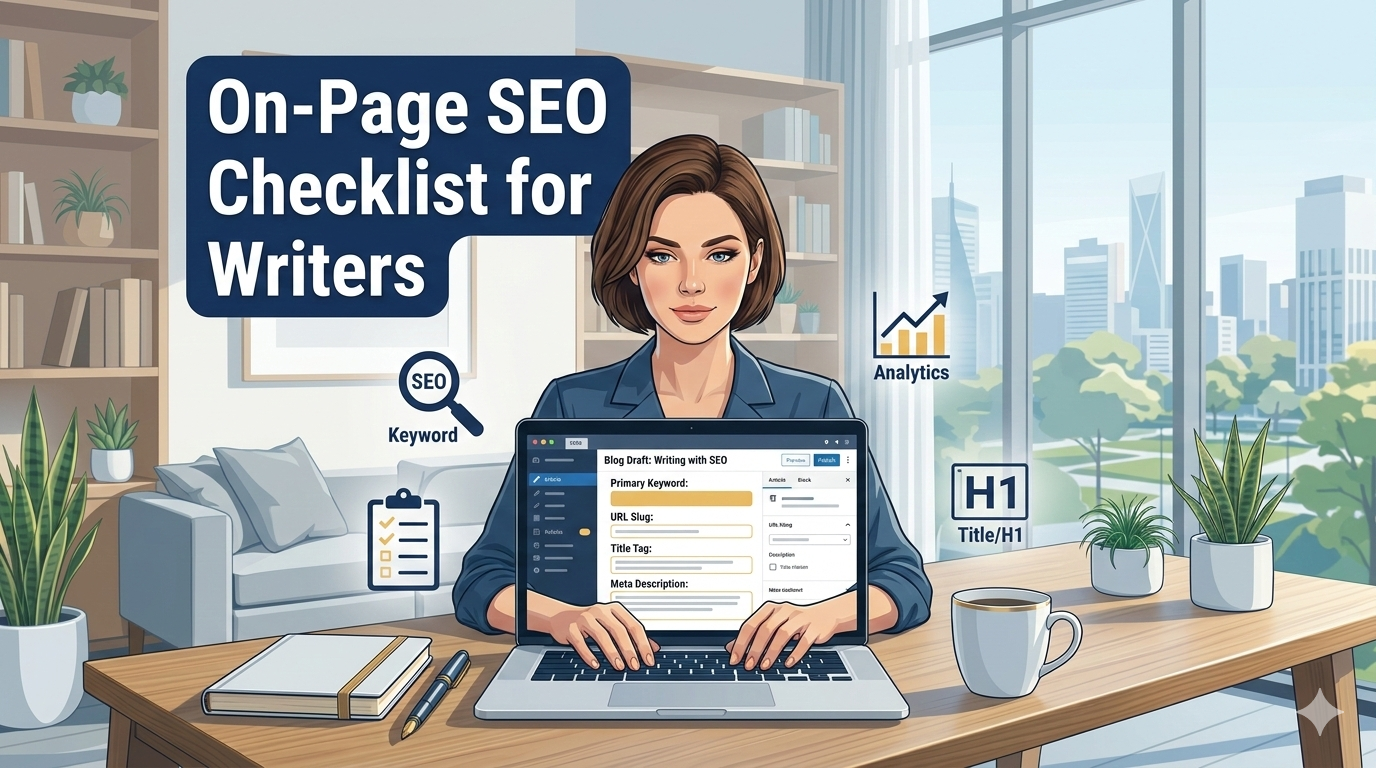
Cover Image Prompt for AI:
“Modern flat design illustration of a writer working on a laptop surrounded by SEO icons like keywords, headings, links, and analytics graphs. Style: clean, modern, bright, professional. Aspect ratio: 16:9.”
6. Internal & External Linking
Links improve authority and user experience.
Checklist:
- Link to related articles on your site (internal linking)
- Use descriptive anchor text
- Add external links to high-authority sites (Wikipedia, HubSpot)
- Avoid broken links
💡 Tip: Linking older posts to new content boosts SEO across your blog.
7. URL Optimization
A clean, keyword-rich URL helps SEO.
Checklist:
- Include primary keyword in the URL
- Keep URLs short and readable
- Use hyphens to separate words
- Avoid unnecessary stop words
Example:
https://zenowrites.com/on-page-seo-checklist-writers
8. Mobile Optimization & Page Speed
Google prioritizes mobile-friendly websites.
Checklist:
- Ensure responsive design
- Use fast-loading themes
- Compress images and videos
- Enable caching and lazy loading
💡 Tool: Google PageSpeed Insights to analyze speed performance.
9. Meta Tags & Schema Markup
Structured data improves how your content appears in search results.
Checklist:
- Add meta title & description
- Include Open Graph tags for social sharing
- Use Schema markup (Article schema, FAQ schema)
- Ensure schema matches content
10. Content Readability
Search engines favor easy-to-read content.
Checklist:
- Flesch Reading Ease: 60–70
- Short sentences & paragraphs
- Avoid jargon unless necessary
- Use headings, bold, italics for emphasis
- Include tables, bullet points, or images
💡 Tip: Tools like Hemingway Editor or Yoast SEO readability analysis can help.
11. Call-to-Actions (CTA)
Encourage engagement with CTAs:
Checklist:
- Include internal links to related posts or resources
- Encourage comments, shares, or newsletter signups
- Use action words: “Download,” “Read Next,” “Subscribe”
12. Post-Publishing Checklist
Before publishing:
- Proofread and edit content
- Check broken links
- Add categories and tags
- Preview mobile and desktop view
- Submit sitemap to Google Search Console
Conclusion
Implementing a structured on-page SEO checklist ensures your blog posts are optimized for Google and readers. By following these steps, writers can:
- Improve search rankings
- Drive more organic traffic
- Enhance user engagement
- Build authority in their niche
SEO is an ongoing process, but using this step-by-step checklist will give you a head start in 2026.
