

Introduction
In today’s fast-paced digital world, content is king—but the way it’s created is evolving. With AI writing tools like ChatGPT, Jasper, and Writesonic becoming more sophisticated, many writers and businesses ask: Can AI content replace human writers for SEO purposes?
This article dives deep into the differences, benefits, and limitations of AI and human writing for SEO, helping you make an informed choice.
Table of Contents
- Understanding AI Writing
- How Human Writing Impacts SEO
- Pros and Cons of AI Content for SEO
- Pros and Cons of Human Content for SEO
- Key Factors for SEO Success
- AI + Human Hybrid Approach
- Conclusion
1. Understanding AI Writing
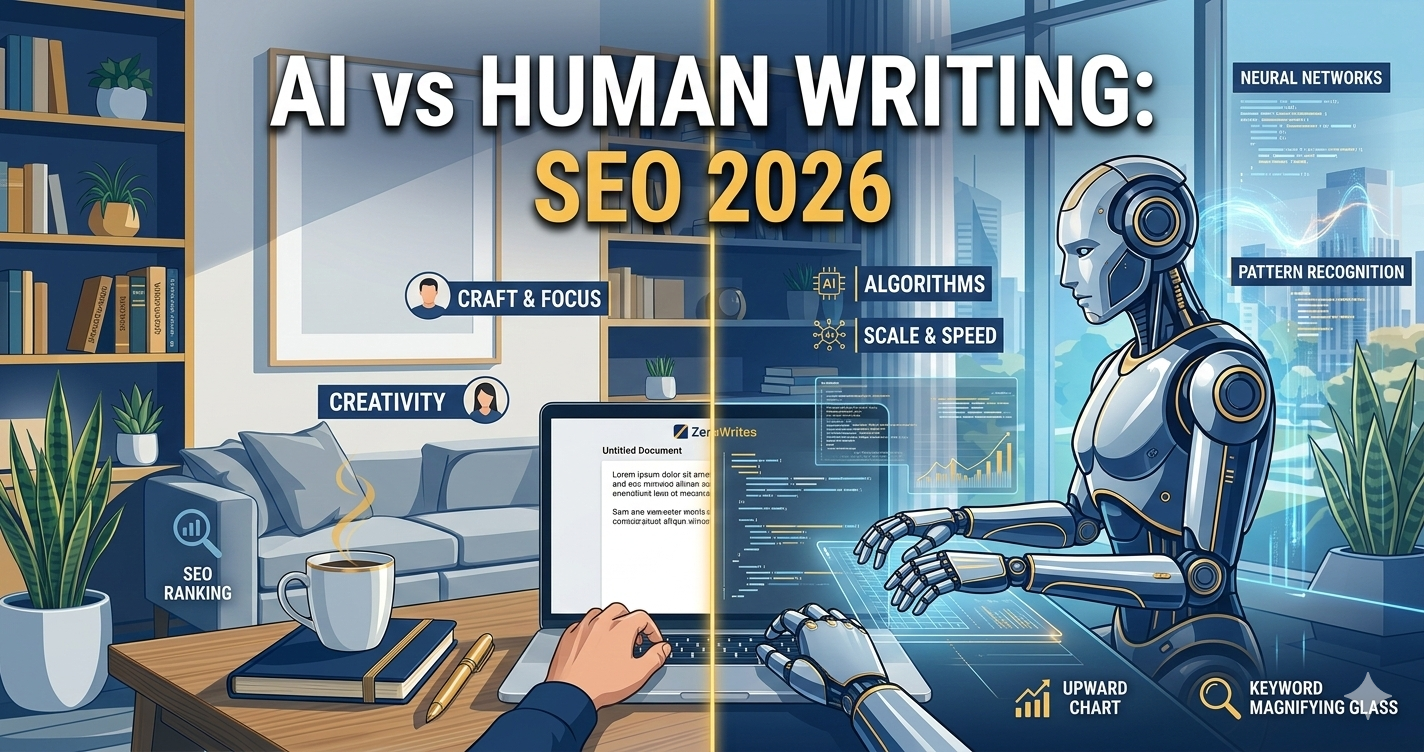
AI writing uses artificial intelligence and machine learning to generate text. Popular AI writing tools can:
- Produce blog posts quickly
- Suggest headlines, meta descriptions, and keywords
- Rewrite or optimize existing content
How AI Works for SEO:
AI tools analyze search trends, keywords, and top-ranking pages to produce content designed to rank on Google.
Example: Using ChatGPT to write a 1000-word article on “content marketing tips” can take only a few minutes, compared to hours for a human writer.
2. How Human Writing Impacts SEO
Human-written content focuses on creativity, engagement, and storytelling. While it may take longer, it adds:
- Unique perspectives
- Personal anecdotes
- Emotional connection with readers
- Context-aware phrasing
Why it matters for SEO: Google increasingly prioritizes E-E-A-T (Experience, Expertise, Authority, Trust) and user engagement metrics like time on page and bounce rate. Human writers excel here because they naturally provide context and nuance that AI may miss.
3. Pros and Cons of AI Content for SEO
Pros
- Speed: AI can generate long articles in minutes.
- Keyword Optimization: AI can naturally include keywords and phrases.
- Cost-Effective: Reduces costs for businesses needing large volumes of content.
- Idea Generation: Great for outlines, blog topics, and headings.
Cons
- Lacks Emotional Depth: AI struggles with humor, empathy, or storytelling.
- Can Be Generic: Often produces similar content across multiple sources.
- Risk of AI Penalties: Google may detect low-quality or fully AI-generated content.
- Editing Required: Human oversight is often needed to refine tone and accuracy.
4. Pros and Cons of Human Content for SEO
Pros
- Authenticity: Human writers create content that resonates emotionally.
- Expertise & Authority: Writers with experience can provide unique insights.
- Better User Engagement: Humans naturally write content that retains readers.
- Trust Factor: Personal, narrative-driven content is often perceived as more trustworthy.
Cons
- Time-Consuming: Writing high-quality content takes hours.
- Higher Cost: Hiring skilled writers may be expensive.
- Keyword Limitations: May require SEO tools to optimize naturally.
5. Key Factors for SEO Success
Whether you choose AI, human, or a hybrid approach, these SEO principles remain critical:
- Keyword Research: Identify primary and long-tail keywords.
- Content Structure: Use headings (H1, H2, H3), bullet points, and short paragraphs.
- Engaging Meta Tags: Create click-worthy titles and meta descriptions.
- Internal Linking: Link to relevant pages on your website.
- Backlinks: Encourage other authoritative sites to link to your content.
- User Experience: Mobile-friendly, fast-loading pages improve rankings.
- Originality: Avoid duplicate content; Google favors unique content.
6. AI + Human Hybrid Approach
The best SEO results in 2026 often come from a hybrid approach:
- Step 1: Use AI to draft the article, suggest keywords, or outline structure.
- Step 2: Human writer edits, adds personality, and ensures accuracy.
- Step 3: SEO optimization with headings, meta tags, and internal links.
Why Hybrid Works: You get speed + creativity + SEO optimization, producing content that ranks higher while engaging readers.
7. Conclusion
- AI Content: Fast, cost-effective, but may lack depth.
- Human Content: Engaging, authoritative, trustworthy, but slower and costlier.
- Hybrid Approach: Combines the best of both worlds for maximum SEO impact.
✅ Recommendation: For writers, bloggers, and businesses, using AI as a tool rather than a replacement ensures high-quality content that satisfies both readers and search engines.
